IRP Seminars will be in-person meetings this semester, unless otherwise noted. Connection information for virtual seminars will be sent in advance to the IRP Seminar email list.
Thursday, January 22
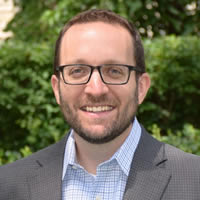 Powers and Practices in Labor Standards Enforcement
Daniel Galvin, Professor, Department of Political Science and Institute for Policy Research, Northwestern University
12:15–1:30 pm, 8417 Sewell Social Science Building
Wage theft remains a pervasive problem internationally and within the United States. In response, worker advocates have sought stronger laws to deter violations and promote compliance. Yet formal authority alone may be insufficient; labor departments often fail to use the full extent of their legal authority to conduct vigorous enforcement. This raises two empirical questions: to what extent do agencies deploy available enforcement tools, and with what consequences? Drawing on a novel survey of U.S. state labor departments, new measures of statutory strength in wage-hour laws, and state-level estimates of minimum wage violations, we find widespread nonuse of available powers. This misalignment of powers and practices has substantive consequences: the predicted probability of minimum wage violation falls sharply as strategic enforcement practices increase, conditional on strong labor laws. However, this effect shows no measurable impact for some of the most vulnerable workers, suggesting limits in reaching those at greatest risk. We conclude by outlining a forward-looking research agenda on the (mis)alignment of powers and practices.
Thursday, January 29
 A Chip Off The Old Block? Genetics and The Intergenerational Transmission of Socioeconomic Status
Silvia Helena Barcellos, Associate Professor, Population Health Sciences and La Follette School of Public Affairs, University of Wisconsin–Madison
12:15–1:30 pm, 8417 Sewell Social Science Building
Progress in understanding the role of genetics in intergenerational socioeconomic persistence has been hampered by challenges of measurement and identification. We examine how the genetics of one generation influences the SES of the next by linking genetic data from the Dutch Lifelines Cohort to tax records for 2006-2022. Our genetic measure is the polygenic index (PGI) for educational attainment. To isolate causal genetic effects, we exploit randomness in genetic transmission across generations. One generation’s genetics impacts the education, income, and wealth of the next. We next turn to mechanisms: about half of next-generation genetic effects reflect direct genetic inheritance (“genetic transmission”). The remainder operates through environmental pathways (“genetic nurture”): one generation’s genetics shapes the circumstances in which the next is raised. This environmental channel is reinforced by assortative mating: high-PGI individuals select more-educated, higher-earning partners, who further shape offspring environments. By contrast, we find no evidence that partners match on genetic similarity (“genotypic assortative mating”).
CANCELED – Thursday, February 5
 Child Protective Service Involvement and Parental Economic Precarity: Evidence from System-Impacted Parents
Margaret Thomas, Assistant Professor, Crown Family School of Social Work, Policy, and Practice, University of Chicago
12:15–1:30 pm, 8417 Sewell Social Science Building
The current project explores how parents’ economic well-being is impacted by their involvement with CPS systems. There is a nascent body of evidence indicating that CPS involvement negatively influences parents’ financial well-being through impacts on public benefit receipt, employment challenges, and child support payments if children enter foster care. We build on this literature by providing direct qualitative evidence from parents on the economic consequences of their CPS involvement. Results indicate that CPS-impacted parents experienced direct and indirect economic consequences from involvement with this system. These included universal experiences of some forms of economic harm, including (1) direct costs incurred while navigating the CPS system, including legal costs and transportation costs; (2) work scheduling conflicts and labor force stigma associated with navigating CPS processes; (3) lost public benefits and services; and (4) child support enforcement costs if children entered foster care. We also find some economic benefits experienced by some but not most parents, including (1) receipt of cash or in-kind provisions; (2) linkage to or eligibility for other services; and (3) reduction of costs previously experienced through changes like reduced substance use or domestic violence exposure.
Thursday, February 12
 How Things Fall Apart: The Excuses America Makes for Housing in Disrepair
Robin Bartram, Associate Professor, Crown Family School of Social Work, Policy, and Practice, University of Chicago
12:15–1:30 pm, 8417 Sewell Social Science Building
How Things Fall Apart investigates the challenge of housing quality, drawing on over 200 interviews with a broad range of actors—from homeowners and landlords to grassroots organizers and city officials—in New Orleans and Chicago. The book demonstrates how context and policy structure—and how owners and governments navigate—ordinary and exceptional decay and disrepair in aging housing stocks, revealing that persistent acceptance and normalization of old, dilapidated housing reproduces housing precarity and racial and economic inequality.
Thursday, February 19
 Not All Bids Are Equal: Racial Gaps in the Housing Market
Lu Han, Professor, Department of Real Estate and Urban Land Economics, University of Wisconsin–Madison
12:15–1:30 pm, 8417 Sewell Social Science Building
We study racial disparities in housing transactions using novel data that observe the full set of offers submitted for residential properties, including both accepted and rejected bids. Exploiting within-listing comparison across competing offers, we show that minority buyers bid less on average yet pay more conditional on winning. Holding bid amount, rank, and detailed offer terms constant, minority buyers are significantly less likely to have their offers accepted. This joint pattern is difficult to reconcile with explanations based solely on heterogeneous preferences, financing constraints, or search costs. Instead, it points to differential acceptance thresholds applied by sellers.
We estimate a conditional logit model of seller choice and quantify the bid-equivalent penalty faced by minority buyers. The implied penalty is economically large—approximately 2–3 percent of home value and persists even among all-cash offers. Disparities widen in tighter and faster-turnover markets, in listings with more competing bidders, and in neighborhoods undergoing amenity improvement and demographic transition. Racial disparities are therefore not uniform: they intensify where sellers have stronger outside options and where the identity of the marginal buyer is perceived as consequential. Our evidence shows that racial gaps operate through endogenous acceptance thresholds that vary with market structure and neighborhood dynamics.
Thursday, February 26
 Widening Class Gaps and Narrowing Race Gaps in U.S. Mortality
Hannes Schwandt, Associate Professor, Human Development and Social Policy, School of Education and Social Policy, Northwestern University
12:15–1:30 pm, 8417 Sewell Social Science Building
The United States is experiencing a compounding mortality crisis, marked by large life expectancy gaps between income and racial-ethnic groups. This paper uses administrative linked tax records and area-level Vital Statistics covering the universe of deaths between 2001 and 2019 to analyze the recent evolution of U.S. mortality, documenting strong increases in class gaps at the same time that racial-ethnic gaps narrowed. We analyze the cause-specific drivers underlying these trends and examine technological progress, access to medical care, and social determinants of health as important mechanisms.
Thursday, March 5
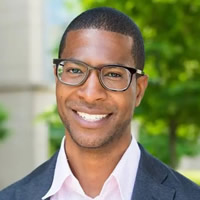 The Social Psychology of Socioeconomic Mobility
Mesmin Destin, Professor, Department of Psychology and School of Education and Social Policy, Northwestern University
12:15–1:30 pm, 8417 Sewell Social Science Building
One of the most consistent and strongly held motivating forces is the goal of working towards the idea of a better life. Social psychological research provides a scientific understanding of the societal circumstances that guide people’s beliefs about whether socioeconomic mobility is possible. Furthermore, studies have demonstrated the consequence of these beliefs for how people imagine their own lives and pursue those visions. Around these insights, a rich accumulation of experimental research has shed new light on the psychological processes and social circumstances that help people to pursue goals of socioeconomic mobility. They illuminate the power and importance of systems that recognize the value of people’s identities that are often seen only as negative sources of marginalization to overcome. The studies also demonstrate key types of support that can lead to both achievement and well-being simultaneously, rather than success accompanied by social isolation and poor health.
Monday, March 9

Household Finance Seminar, cosponsred with IRP
Shifting Administrative Burden through Universal Free Lunch: Effects on Political Support for Schools
Meredith Dost, Postdoctoral Fellow, Better Government Lab, McCourt School of Public Policy, Georgetown University
1:15–2:15 pm, 1199 Nancy Nicholas Hall
Studying the period of staggered Community Eligibility Provision (CEP) rollout across and within states, I examine the extent to which communitylevel political support for school district funding was affected by the implementation of the CEP. The CEP allows schools and school districts to provide free meals to all students by proving that at least 40% of their student population would be income-eligible to receive a free meal. By participating in the CEP, the administrative burden of filling out applications for free or reduced-price meals is removed from individual families. Schools are often able to utilize administrative data that they already possess for this purpose.
Focusing on Illinois-an early adopter-and Wisconsin, the study compares district-level voting choices in school referenda measures in districts that implemented the CEP with ones that did not. Applying policy feedback theory, I expect this significant reduction in household-level administrative burden in low-income families-and free lunches for all students-to result in increased political support for schools in CEP-adopting communities. Over the period of study in the two states, there were thousands of district-level referenda on the ballot, which typically increase local taxes or otherwise direct more funds to schools. Given that some CEP-eligible schools still do not participate, there is a significant opportunity for greater participation; the findings of my study may serve as additional incentives for schools to opt in.
Tuesday, March 10
 Measuring the Association Between Federal Income Transfer Program Expenditures and Nonprofit Human Services Expenditures
Shoshana Shapiro, National Poverty Fellow, Institute for Research on Poverty, University of Wisconsin–Madison
12:15–1:30 pm, 3470 Sewell Social Sciences Building
There are two parts of the U.S. social safety net: direct transfer programs such as SNAP, TANF, the EITC, and WIC, and nonprofit human services programs providing in-kind food, housing, transportation, cash assistance, and other local in-kind supports. This paper explores county-level relationships between these two parts of the social safety net. Is there a relationship of double disadvantage, where counties receiving lower rates of direct personal income transfers also receive lower rates of nonprofit expenditures? Or is there a replacement effect, where counties receiving lower rates of government transfers receive higher rates of nonprofit human services expenditures? Results update historical literature from prior to welfare reform to analyze the association between personal income transfers and nonprofit expenditures at the county level. We use data from the NCCS IRS-990 dataset and the Bureau of Economic Analysis Regional Economic Accounts Dataset to analyze the following research question: How are personal income transfer expenditures from the government associated with nonprofit human services expenditures at the county level? Preliminary analysis supports the double disadvantage hypothesissuggesting that counties with lower rates of personal income transfer expenditures also receive lower rates of nonprofit human services expenditures.
Thursday, March 12
 Implementing a Trauma Screening Protocol within TANF and Other Employment Services
Dimitri Topitzes, Professor and Department Chair, Helen Bader School of Social Welfare
Director of Clinical Services, Institute for Child and Family Well-Being, University of Wisconsin–Milwaukee
12:15–1:30 pm, 8417 Sewell Social Science Building
This talk will present the empirical argument for implementing a trauma screening protocol within TANF and other employment service programs. Developed at UW-Milwaukee from an existing model, the trauma screening protocol (i.e., trauma screening, brief intervention, and referral to treatment or T-SBIRT) is a brief, semi-structured interview that uses motivational interviewing elements to help individuals acknowledge and address trauma exposure and symptoms. The talk will also detail the T-SBIRT implementation processes and outcomes along with future direction.
Thursday, March 19
 Labor Market Effects of the Tax Cuts and Jobs Act
Anil Kumar, Professor and Henry B. Tippie Research Fellow, Department of Economics, University of Iowa
12:15–1:30 pm, 8417 Sewell Social Science Building
The Tax Cuts and Jobs Act (TCJA) of 2017 represents the most significant reform of the U.S. income tax code since the Tax Reform Act of 1986. Previous analyses of the TCJA’s economic impact often rely on projections based on data prior to the enactment of the legislation. This paper leverages plausibly exogenous variations in state-level tax changes brought about by the TCJA and employs local projections to examine its effects on the labor market. Measures of TCJA tax shocks are constructed with the NBER-TAXSIM model using state-level tabulations of individual income tax returns from the Statistics of Income. Findings suggest that tax cuts amounting to 1 percent of Adjusted Gross Income under the TCJA are associated with a 0.7-1 percentage point increase in the labor force participation rate and a 0.8-1.5 percentage point acceleration in job growth over the two years following the TCJA’s implementation. Results appear broadly robust to assumptions about heterogeneous state responses and the inclusion of interactive fixed effects.
CANCELED – Thursday, March 26
Social Disadvantage and Legal Representation in the North Carolina Judicial System
Marty Davidson, Assistant Professor, Department of Political Science, University of Wisconsin–Madison
12:15–1:30 pm, 8417 Sewell Social Science Building
This paper examines how social disadvantage influences the quality of legal representation defendants have in the North Carolina judicial system. What does the distribution of quality look like? How does this quality impact subsequent legal outcomes?
Thursday, April 2
NO SEMINAR – Spring Break
Thursday, April 9
 Neighborhood Desirability and Decision Making in Online, Multiracial, Metropolitan America
Max Besbris, Associate Professor, Department of Sociology, University of Wisconsin–Madison
12:15–1:30 pm, 8417 Sewell Social Science Building
While the housing search has largely moved online for urban residents, little work has examined if and how the information homeseekers are exposed to on housing websites matters for their assessments of potential destinations. We designed a unique, geographically contextual survey experiment that uses real neighborhood names and actual online housing advertisement text to test if residents’ ratings of neighborhoods as desirable are impacted by novel information. We find that online housing information largely reproduces the existing racial-spatial hierarchy where non-poor White neighborhoods are rated as the most desirable and poor Black and Latinx neighborhoods are rated as the least, with Asian neighborhoods in between. Residents’ prior familiarity with neighborhoods in their metro attenuates but does not fully explain away these effects and the effect is varied by race/ethnicity with White residents as the most sensitive to novel information. We offer a sophisticated model of the digital information environment in which an ethnoracially diverse population of residents are exposed to neighborhood options, and we detail how our methods improve survey experiment design more broadly. Our results show that relatively small amounts of seemingly race-neutral information can impact residential preferences.
Thursday, April 16 – Robert J. Lampman Memorial Lecture
 The Skill Divide in the Gig Economy
Katharine Abraham, Distinguished University Professor of Economics, Department of Economics , University of Maryland
4:00–6:00 pm, Varsity Hall Ill (2nd Floor), Union South
Growing numbers of U.S. workers are employed as independent contractors rather than wage-and-salary employees. A sizable share of the workforce pieces together multiple streams of income rather than relying on earnings from a single job. For some, these arrangements offer real benefits and are personally satisfying. For others, however, the picture is bleaker. The lecture will present new evidence on the skill divide in today’s gig economy and consider its implications for workers and public policy.
Thursday, April 23
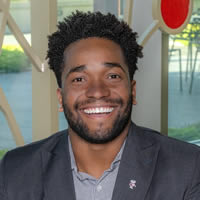 Economic Stability and Development: The Role of Family Income and Child Support
Quentin Riser, Assistant Professor, Department of Human Development and Family Studies, University of Wisconsin–Madison
12:15–1:30 pm, 8417 Sewell Social Science Building
Economic stability in early childhood plays a crucial role in shaping both developmental outcomes in early life and economic mobility in adulthood. Using latent class-growth analysis on data from the Early Childhood Longitudinal Study-Birth Cohort, we identify distinct income trajectories and their association with school readiness, cognitive, and social-emotional development. Results indicate that children in persistently low-income families exhibit the poorest school readiness outcomes. Additionally, leveraging data from the Wisconsin Child Support Demonstration Evaluation and the Wisconsin Court Record Data, we examine the long-term economic impact of child support receipt, finding that consistent support is associated with higher earnings in adulthood. Findings underscore the interconnected nature of early financial stability, policy interventions, and long-term economic mobility.
Thursday, April 30
 Credit Access among Formerly Justice-Involved Entrepreneurs: Regression Discontinuity Evidence from the Paycheck Protection
Brittany Street, Assistant Professor, Department of Economics, University of Missouri
12:15–1:30 pm, 8417 Sewell Social Science Building
In the face of labor market penalties, entrepreneurship may help justice-involved individuals achieve economic self-sufficiency. Successful self-employment, however, may require credit access, which could itself be constrained due to discrimination or the policies of financial institutions. In this paper, we introduce two new pieces of evidence on this topic. First, we link the Survey of Business Owners to respondents’ criminal histories and find that small business owners with criminal records have less loan-based start-up and expansion capital and are more likely to report ceasing operations due to financial constraints. Second, we leverage a discrete eligibility rule in the Paycheck Protection Program based on an applicants’ criminal history for a regression discontinuity to measure the causal effect of federal loans for those with felony records. We find that PPP eligibility improves entrepreneur business outcomes, reduces the likelihood that they begin working for another employer, and decreases their future criminal convictions. We observe similar loan performance among justice-involved individuals, who are currently underserved by financial institutions, relative to other small business owners, which suggests that public small business funders can generate an attractive return on investment when reduced recidivism is taken into account.