IRP Seminars will be in-person meetings this semester, unless otherwise noted. Connection information for virtual seminars will be sent in advance to the IRP Seminar email list.
Thursday, September 10, 2026
 Do Housing Vouchers Work When Rental Markets Don’t? Demand-Side Assistance Amid Extreme Rental Shocks
Sarah Strochak, Assistant Professor, La Follette School of Public Affairs, University of Wisconsin–Madison
12:15–1:30 pm, 8417 Sewell Social Science Building
Housing Choice Vouchers are the primary form of rental assistance in the United States, yet they rely on the private provision of housing and are therefore heavily exposed to shocks to the rental market. During the period of rapid rent increases in 2021–2022, voucher success rates dropped sharply, while search times, overcrowding, and program costs rose. We identify three implementation strategies that can help to improve program performance amid periods of rapid rent increases.
Thursday, September 17, 2026
 Subverting the Law: Traffic Courts, Driver’s License Suspension Reforms, and Racial Inequality
Peter Rich, Associate Professor, Department of Sociology, University of Wisconsin–Madison
12:15–1:30 pm, 8417 Sewell Social Science Building
Millions of people in the United States have their driver’s license suspended each year when they do not pay a traffic fine or appear in traffic court. These suspensions are concentrated in Black and Latinx communities that experience higher levels of socioeconomic disadvantage, residential segregation, and policing. This seminar presents a study from New York State following the June 2021 enactment of the New York Driver’s License Suspension Reform Act (DLSRA), which ended suspensions for failure to pay traffic tickets. Drawing on unique DMV records, we show that although total suspensions declined across the state when suspensions for failure to pay were eliminated, suspensions for failure to appear in court increased in response to the law. Traffic courts played a key role in subverting the equity-based goals of the DLSRA.
Thursday, September 24, 2026
 Penalties in the Safety Net: Economic Consequences of Work Requirement Enforcement
Katherine Richard, Assistant Professor, La Follette School of Public Affairs, University of Wisconsin–Madison
12:15–1:30 pm, 8417 Sewell Social Science Building
Cash assistance in the United States promotes self-sufficiency through employment but imposes penalties that reduce or remove benefit income when participants violate work requirements. This seminar presents a paper quantifying the downstream consequences of not meeting work requirements using novel administrative data covering the full caseload of Michigan’s Temporary Assistance for Needy Families (TANF) program, combined with monthly enrollment records in the Supplemental Nutrition Assistance Program (SNAP) and Medicaid, as well as quarterly Unemployment Insurance earnings records. We estimate effects of violating work requirements and study a policy reform that increased the length of time families were removed from TANF after violating work requirements. Findings indicate that sanctions reduce broader safety net attachment and increase economic instability for vulnerable families over the long-term.
Thursday, October 1, 2026
 Uncovering College Effect Heterogeneity
Jennie Brand, Professor, Department of Sociology, UCLA
12:15–1:30 pm, 8417 Sewell Social Science Building
Co-sponsored with the Interdisciplinary Training Program in Education Sciences
This talk explores recent advances in causal inference and machine learning with an emphasis on identifying and interpreting treatment effect heterogeneity. Using an empirical application on the heterogeneous effects of completing a 4-year college degree in the United States on low-wage work and poverty across the career, I illustrate how causal machine-learning methods can be applied to substantively important questions. Understanding effect heterogeneity is central to evaluating how scarce resources are distributed, improving treatment assignment to enhance average outcomes, and assessing the external validity of findings beyond the study population. The talk highlights propensity- and covariate-based partitioning strategies, as well as tree-based methods, for detecting and characterizing heterogeneous treatment effects. By integrating these approaches, the analysis reexamines and extends established findings on educational inequality in reducing socioeconomic disadvantage.
Thursday, October 8, 2026
 Unpacking the Returns to Apprenticeships: Evidence from Canada
Fernando Saltiel, Associate Professor, Department of Economics, McGill University
12:15–1:30 pm, 8417 Sewell Social Science Building
We estimate the returns to completing an apprenticeship in Canada using administrative data linking apprenticeship records to tax files between 2008 and 2022. Using a two-step matching estimator in a generalized difference-in-differences design, we find that the returns to completion exceed $12,000, amounting to 20% of baseline earnings. These returns persist through nine years following completion, and are robust across various specifications. Estimated returns vary substantially across trades, ranging from large returns in construction and technical fields to negative returns in some service-based programs. To understand what drives returns to completion, we introduced a modified Gelbach decomposition, which showed that unionization and industry mobility explain part of the returns. Results suggest that apprenticeships primarily deliver general human capital rather than occupation-specific skills.
Thursday, October 15, 2026
 Sociohistorical Contexts of Racial Violence: Sundown Towns and the Durability of Racialized Public Space
Michael Esposito, Associate Professor, Department of Sociology, University of Minnesota
12:15–1:30 pm, 8417 Sewell Social Science Building
Scholarly work on racial violence has illustrated the diverse effects of historical practices like slavery, lynching, and redlining upon contemporary racial inequalities. We extend this work by considering the durable legacy of sundown towns – an understudied package of legal and conventional practices restricting the mobility of Black communities. We argue that the racialized organization of public space that was produced via sundown practices is expressed today in racialized engagement with public resources and test this using cell phone location data.
Thursday, October 22, 2026
WADC Day – Exploring the Wisconsin Administrative Data Core
12:15–1:30 pm, 8417 Sewell Social Science Building
The Wisconsin Administrative Data Core (WADC) is a unique, collaborative partnership between the Institute for Research on Poverty (IRP) and Wisconsin state agencies that includes administrative data from 16 public benefit, education, health, and criminal justice programs for applied policy research.
This session will provide:
- An overview of the WADC
- Updates on the latest data release
- How to turn your research question into a WADC project
- Flash Talks from UW WADC researchers.
Thursday, October 29, 2026
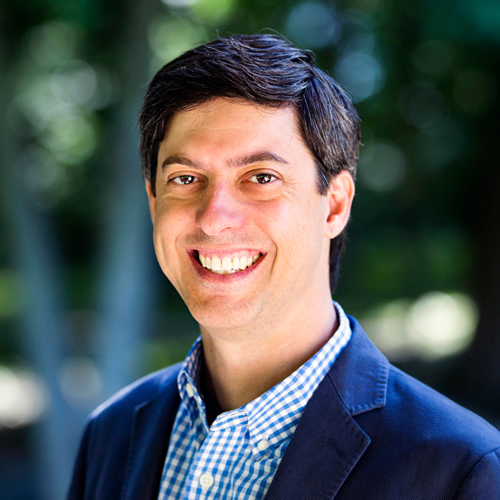 Better Data Communication
Jonathan Schwabish, Senior Fellow, Tax and Income Supports Division, Urban Institute and Founder of PolicyViz
12:15–1:30 pm, 8417 Sewell Social Science Building
Co-sponsored with Center for Demography and Ecology (CDE) and Center for Demography of Health and Aging (CDHA)
Most academic reports and presentations bury great data under clutter, jargon, and bullet points nobody can follow. The result: insights that never land, findings that get overlooked, and audiences who tune out before the real point even arrives. It doesn’t have to be this way. In this talk, I share practical frameworks for cutting through the noise and making your data impossible to ignore. Drawing on real-world examples, I’ll demonstrate what separates charts that clarify from those that confuse, and presentations that resonate from those that get forgotten. You’ll leave with a concrete, repeatable toolkit: A way to think about your data before ever opening a chart tool, and a way to structure your delivery so audiences don’t just see your findings, they understand them, remember them, and act on them.
Thursday, November 5, 2026
No Seminar – APPAM
Thursday, November 12, 2026
 Did the Affordable Care Act Save Lives?
Anuj Gangopadhyaya, Assistant Professor, Department of Economics, Loyola University Chicago
12:15–1:30 pm, 8417 Sewell Social Science Building
Whether health insurance saves lives remains contested, and recent studies exploiting the Affordable Care Act’s (ACA) Medicaid expansions have reported sizable mortality reductions without obtaining direct estimates of the effect of coverage itself. We use the 2010 to 2013 National Health Interview Survey linked to the National Death Index through 2019 to study the effect of the ACA on the quarterly hazard rate of dying among adults aged 40 to 58, classifying individuals by their insurance status prior to the ACA so that the previously uninsured, who were highly treated, are compared to the previously insured, who were largely unaffected. A difference-in-differences design identifies the national effect of the ACA, which includes the Marketplace and the Medicaid woodwork effect, and a difference-in-difference-in-differences design that adds regional variation in Medicaid expansion identifies the marginal effect of the expansions. We find that estimates relying solely on geographic variation in expansion imply large mortality reductions, but these are driven entirely by the insured comparison group, for whom there is no plausible causal mechanism, indicating substantial confounding between expansion status and determinants of mortality unrelated to the policy. Once baseline insurance status is used to isolate exposure, the incremental effect of the Medicaid expansions on the mortality of the previously uninsured is close to zero, and what modest beneficial effect we observe is attributable to the national component of the ACA.
Thursday, November 19, 2026
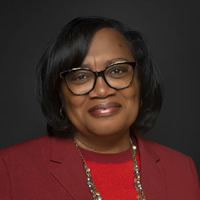 The Impact of Economic and Psychological Stress on the Parenting and Development of Young Children
Brenda Jones Harden, Ruth Ottman Class of ’45 Professor of Child and Family Welfare, School of Social Work, Columbia University
12:15–1:30 pm, 8417 Sewell Social Science Building
Co-sponsored with Department of Human Development & Family Studies and UW Center for Innovations in Parent-Infant and Early Childhood Mental Health
This presentation will summarize the research on young children’s and their families’ experience of economic and psychological stress and its impact on their outcomes. The results from a person-centered analysis of these experiences and outcomes and its implications for intervention will be examined.
Thursday, November 26, 2026
No Seminar – Thanksgiving
Thursday, December 3, 2026
 TBA
TBA
Carolyn Barnes, Associate Professor, Crown Family School of Social Work, Policy, and Practice, University of Chicago
12:15–1:30 pm, 8417 Sewell Social Science Building